A book for all artists; a book for all humanists. Not sure why it took so long for me to get around to reading this masterpiece, but the timing couldn’t be better as I finish my second novel with many of the same themes surrounding why we create art, why we live.
“Running was an accounting of my spirit. It was my holy hour.”
Inspirational fiction isn’t exactly my MO, as many of you know. But in taking a week off to write this story last week, I found some much-needed solace from the difficult topics in my current long work-in-progress. Take a quick read, give it a thumbs up on the Reedsy page, and leave a comment. Thanks for reading.
Maybe you’ll think I’m in need of medication when I profess my love for the writing process. If I talk about the creative process too much, I will quickly veer off topic. Besides, it might get a little woo-woo metaphysical, a little florid, a little poetical. Hell, even a little mystical.
You see, I don’t want to write about the writer’s hustle. I don’t want to admit the sheer volume of time I spend in endless social media algorithmic guessing games (AKA shamelessly self-promoting into the void). I don’t want to admit how jaded I can become at the bowing and scraping I have to do, much of which is for naught. Every time I send out a query or a short story, my dignity—indeed, my spirit—is implicitly threatened. The incessant trickle-trickle drip-drip of rejections that I have gotten over the years is enough to drive me to quit writing altogether. Why would I want to relive all those little traumas? I would much rather write about the recursive nature of writing and editing, the very cycle of creation and destruction in the process of creating worthwhile art.
See? Told you. Borderline woo-woo.
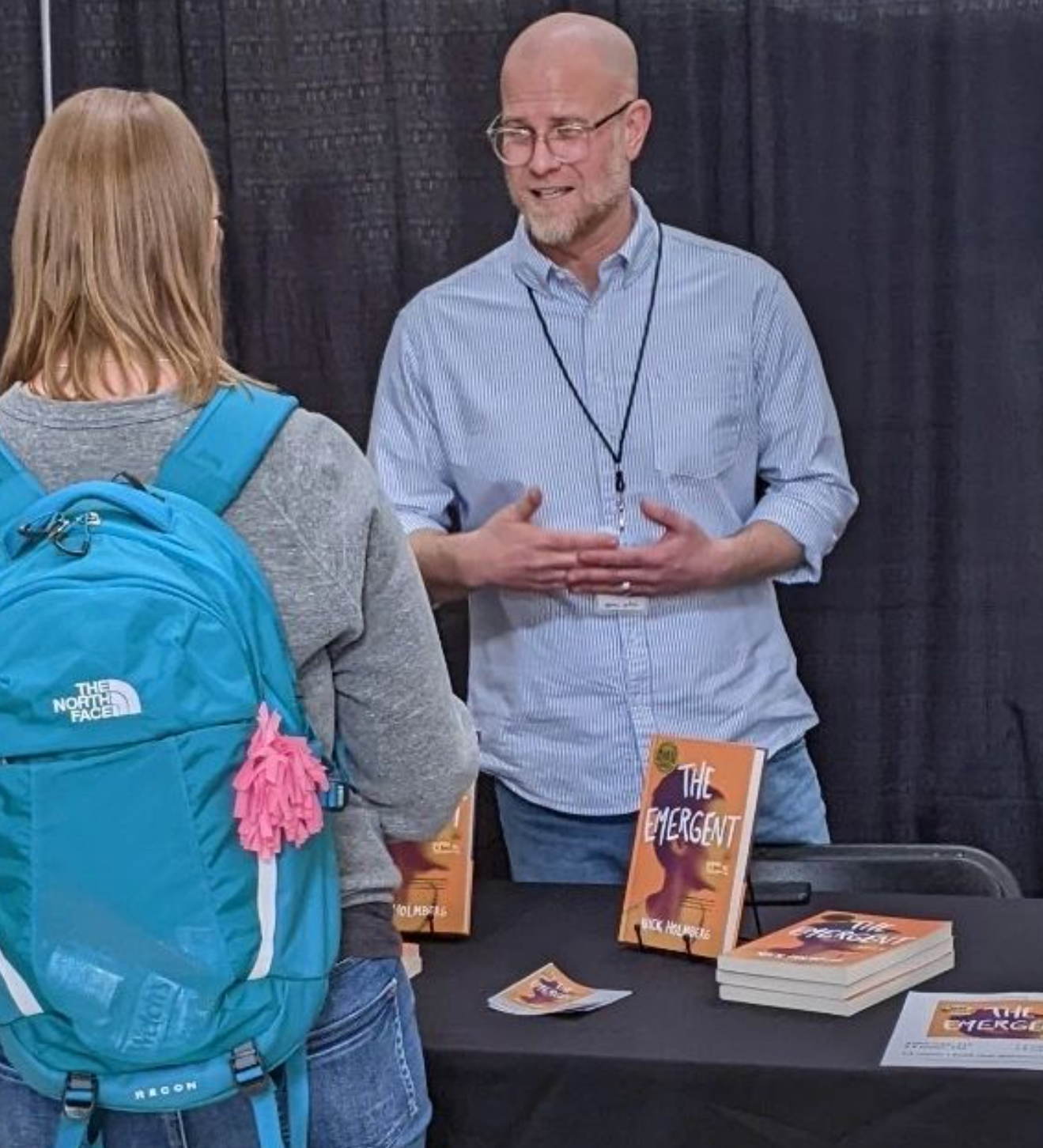
You might say I have a problem. When I hear “No” from a publisher, I reply, “Thank you! May I have another?” There’s plenty of evidence that I’m masochistic in this regard, as I have been trying to get short stories published for over twenty years (order my first published story today). And before my debut novel, The Emergent, was hybrid-published, it took nearly two decades of crafting it with elements of psychological mystery, coming-of-age, family saga, and magical realism. I must be glutton for punishment, thinking for a long while that a modern traditional publisher or agent would have accepted an unknown white hetero dude writing from at least two appropriated perspectives.
I won’t write here about all the hustle and general insanity it takes to get others to publish your work. Contact me to set up a consultation. Suffice it to say that, as an independent writer, getting my writing to market took hustle. Or delusion. Take your pick. But, being an un-agented genre-defying writer makes the hustle-delusion that much more acute.
Instead of focusing on my long line of failures in winning the approval of publishers and lit magazine editorial boards, I’d rather write about the more interesting side of the hustle: talking to folks about the woo-woo side of my writing process. You don’t need the gory details here about endless submissions. What should come across in this post is my love of writing. And trying to prove to publishers what I already know—that my writing is good or that water is wet—is a necessary evil. Once I accepted that the popularity and profit are inaccurate gauges for quality, my job as a writer became easier.
And in an ideal world, popularity and profit would not drive your artistic endeavors.
I’m not saying any of this to portray myself as something I’m not. I ain’t a bloviating egotistical writer-type, despite what my rant here may tell you. I’m simply a writer-type. No stereotypical egotism. Just a writer-type.
Better that than a typewriter. What a life. Born to get punched.
To flog a pun into a bad metaphor, being a writer-type really does mean rolling with the punches, all the small jabs along the way can slowly wear you down over years or, in my case, decades. Fortunately for me (and the folks who have heard me speak at public libraries, on podcasts, or on WHO-TV’s “Hello, Iowa”), the act of writing has never felt like a chore—even when I’m trying to repair the gaping plot holes and stumbles in poetic narratives caused by me killing my darlings. Creative writing has never been work (if it were, I should have demanded a higher wage and maybe some health bennies!). And writing has been only moderately about my quest for Steinbeck-like fame (that dude had ideas that resonated, he had ideas that he researched, wrote about, published to a wide audience, hated to discuss and defended. All this, he did for a living).
Even if you’re not like me—masochistic, self-proclaimed spiritual being intent on being moderately all Steinbeckian and shit—, a published independent writer cannot just sit back and watch their baby go out in the world. This is to say, if you watch and hope for the best, your book will easily get lost in the sea of 4 million books that are published each year. No matter how you publish—self, hybrid, or traditional—hustle after publication is the name of the game.
The decades I have been tapping away on my laptop writing my great American novel have been instructional to my inner life. It has been a spiritual practice to wake and write every morning at 5 AM to create and coax my darlings to do my bidding—or a reasonable facsimile thereof. But over the last year and a half since the release of my novel, the hustle—booking, preparing for, and travelling to attend events—has taken energy. And it takes energy to poorly conjure super-keyworded and algorithmically steroidal social media content. All this promotional energy often has usurped time for my cherished, protected one-hour process practice: my daily 5 AM communion with syntax, vocabulary, and structure.
That said, all the hustle has led to fulfillment; by year’s end, I will have done twenty events. As a result, I have gotten to be a little Steinbeckian, chatting with folks about researching my novel, discussing its overt and subversive themes, and defending my artistic vision.
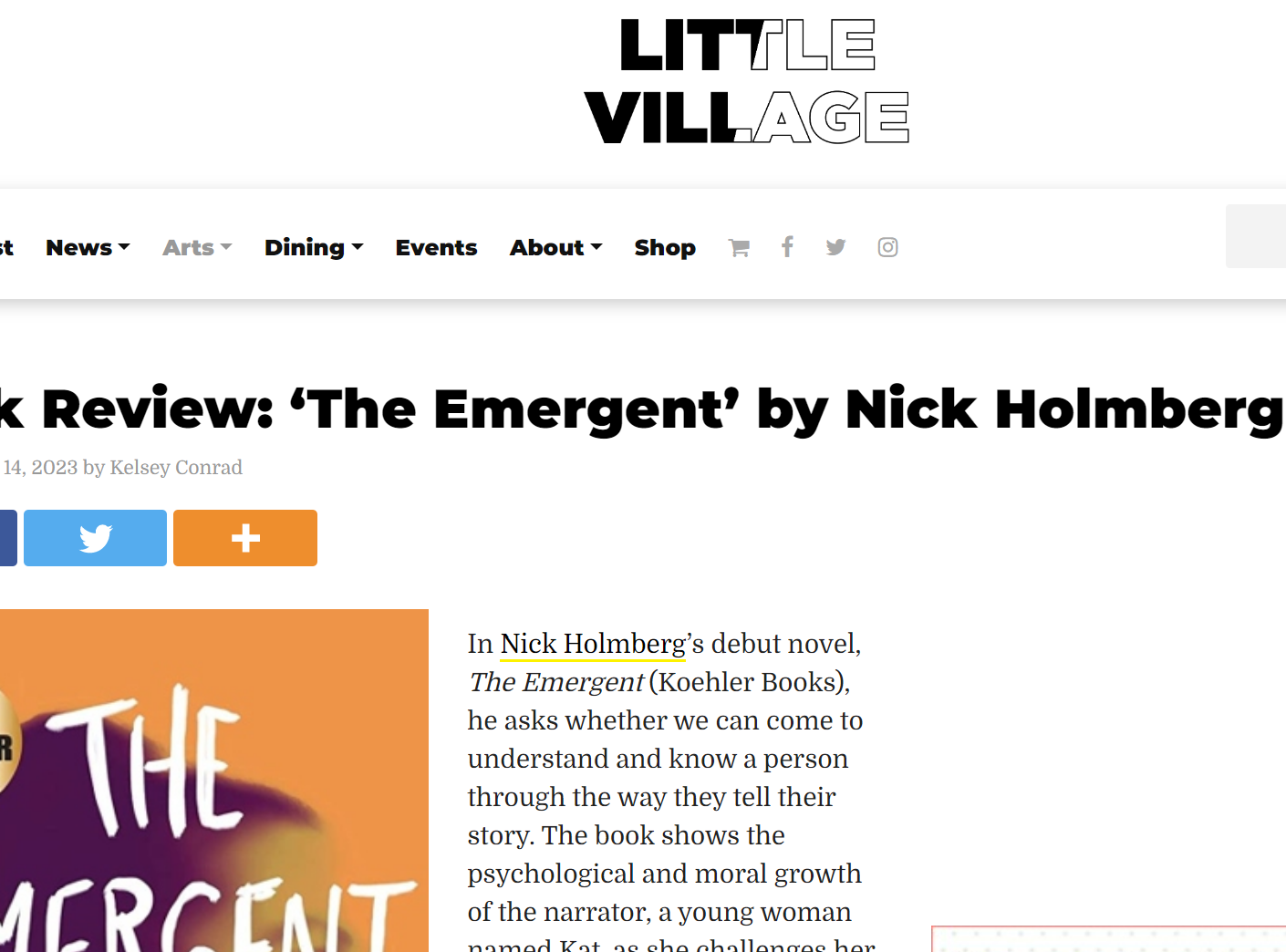
Still on the fence about reading the The Emergent? Or have you read it and want to know what someone else thinks? The novel got a good review in the local arts & culture magazine, Little Village. Take a read here.
I would say the book giveaway on Goodreads was a success. I want to share a little secret about the United States Postal Service. If you are sending hard copies of your books out to patrons, contests, and book fairs in the US, save money by using the book rate. When you go to the post office, just ask your packages to be sent using media mail for a ~50% savings. Slightly slower delivery speed than with regular mail, but well worth it if you have a little extra time.
“A woman’s bold reckoning with memory, and pursuit of all its drifting pieces. The Emergent is just that – an aching recognition of how family narratives persist, holding us in their loving embrace, or imprisonment.”
“The Emergent is a tale of blood, loss, family, and departures that orbits a continent, its casualties, and its letdowns. It is a story for those of us who will never be sure if we only imagined that hand at the shoreline reaching for us.”
“The Emergent is a haunting first-person narrative about young Kat’s shattered family and their complex histories. The title of this sensitive, evocative novel says it all: life is about our emergent selves and the stories we tell and hear along the way.”
“For a novel that moves so swiftly from one American coast to the other, and back again, interestingly it is the obscure neighborhoods of San José that inform the soul of Holmberg’s polyphony of a novel, The Emergent. As a Californian I love this book. I love it because it’s the California I know but almost never read about. In this way, I see it on the bookshelf between Helena María Viramontes’ little masterpiece Under the Feet of Jesus, and Leonard Gardner’s beautiful Fat City. It’s that good.”
“Holmberg has created a compelling and thoughtful novel that is a beautifully crafted and complex narrative. The Emergent causes one to wonder if they will be bystanders in life, or if they’ll jump in–allowing the mysterious mosaic of life to create something fascinating.”
“The Emergent is more than just a family history — it’s Kat’s attempt at finding her own voice and defining herself on her own terms, crafting her identity by choosing what details of her life should make up the person she has become. Kat’s account of what appears as a family history spanning generations succeeds at holding the reader at bay much more effectively than can be [fully] understood until the novel reaches its close.”
“The Emergent is not to be rushed through, if you can help it. Each paragraph is lovingly crafted, and I deeply enjoyed Kat’s Holden Caulfield-like alienation. As I read, I began wondering how real any of our ideas about our personal histories are.”
“… If I could work my will,” said Scrooge indignantly, “every idiot who goes about with Merry Christmas on his lips should be boiled with his own pudding, and buried with a stake of holly through his heart.”
Thus says the famous miser in Dickens’ 1843 novella. And it is in the gloom embodied by this statement that the creators of the recent BBC production must have taken their inspiration. The paces that Scrooge is put through have the clear intention of boiling him in all the consequences of his own exploitive and inhumane practices.
For the first time in my life, I have read Dickens’ A Christmas Carol. Throughout my childhood, I experienced this story mostly through watching my uncle play Marley or Scrooge or Bob Cratchit in a variety of on-stage productions. I was also well-acquainted with Dickens’ famous ghost story through the 1984 production with George C. Scott as Scrooge.
Reading the story in its original form was rewarding in its own way—e.g. the vivid descriptions of the sights and sounds of Scrooge’s little pocket of London in the 1840s were a gift to the numerous stage and screen directors who have treated the story over the years. But what was truly rewarding upon finishing the novella yesterday evening was watching the 2019 production of the tale, starring Guy Pearce as Scrooge. The show was originally presented as a 3-part miniseries. But since my Christmas shopping and wrapping was done, I watched the entire 2 hours 53 minutes in one sitting. And it immediately occurred to me that this ain’t your mother’s A Christmas Carol.
Suffice it to say that this version leans all the way into the ghost story and goes even further to depict the absolute horrors of human misery at the hands of imperialism, a legacy the British and American audiences still grapple with—hopefully in meaningful ways. In a stroke of genius, Steven Knight (writer) takes great liberty at filling in the novella’s ambiguity about Scrooge’s past and present business exploits; the result is a stunning frankness about the depravity of humanity.
The themes starkly depicted in the 2019 rendition—exploitation, unsafe labor practices, unethical business practices, the consequences of unfettered capitalism, slavery, and sexual coercion—would have made Dickens both proud and appalled: Dickens would have applauded the 2019 production’s way of speaking truth to power; paradoxically, Dickens would have loathed to see that the themes he treated throughout his literary career are just as relevant today.
I am not a religious man, at least not in the traditional sense. So my playlists around this time of year look a little different than in past lives; and #1 doesn’t fit the mold of winter holiday song. To hell with it, though. There are people who call Die Hard a Christmas movie, so… And #2 does what it can to break down a traditional song into something far better than the original. My top five holiday songs (in rank order) bring joy. And I’m positive my little nieces and nephew across town will say the same thing. And that’s all that really matters. What are your top 5 holiday/Christmas songs? Leave them in the comments below.
Honorable mention: “Christmas Eve Can Kill You” – The Everly Brothers. I mean, it’s all in the title. Kat mentions it in chapter 3 of The Emergent as she starts to relate Alma’s particularly harrowing holiday:
“Yet I could relate to Alma’s desire to flee the sinking feeling she always had throughout most of December. We somehow became infused with the same sense that something fantastic was supposed to happen. But the alternately high-spirited and depressing tunes of the season led us to conclude that the hope in the season was all an illusion. Over the years of sad Christmases, we had grown used to the feeling. But that particular Christmas, by the time Alma reached her grandparents’ mountain home, Hosanna and “I’ll Be Home for Christmas” and “Christmas Eve Can Kill You” were just too much. So she did something I would never have done: she ran into the woods. Before she knew it, night was coming.”
Could you survive on just three days of Christmas?
This year, putting up the tree and a few lights kept getting bumped down the list of priorities. Professional concerns and artistic pursuits have taken precedence. And now, three days before the big day, there will be no lights, no tree.
And, dare I say, no stress, no FOMO.
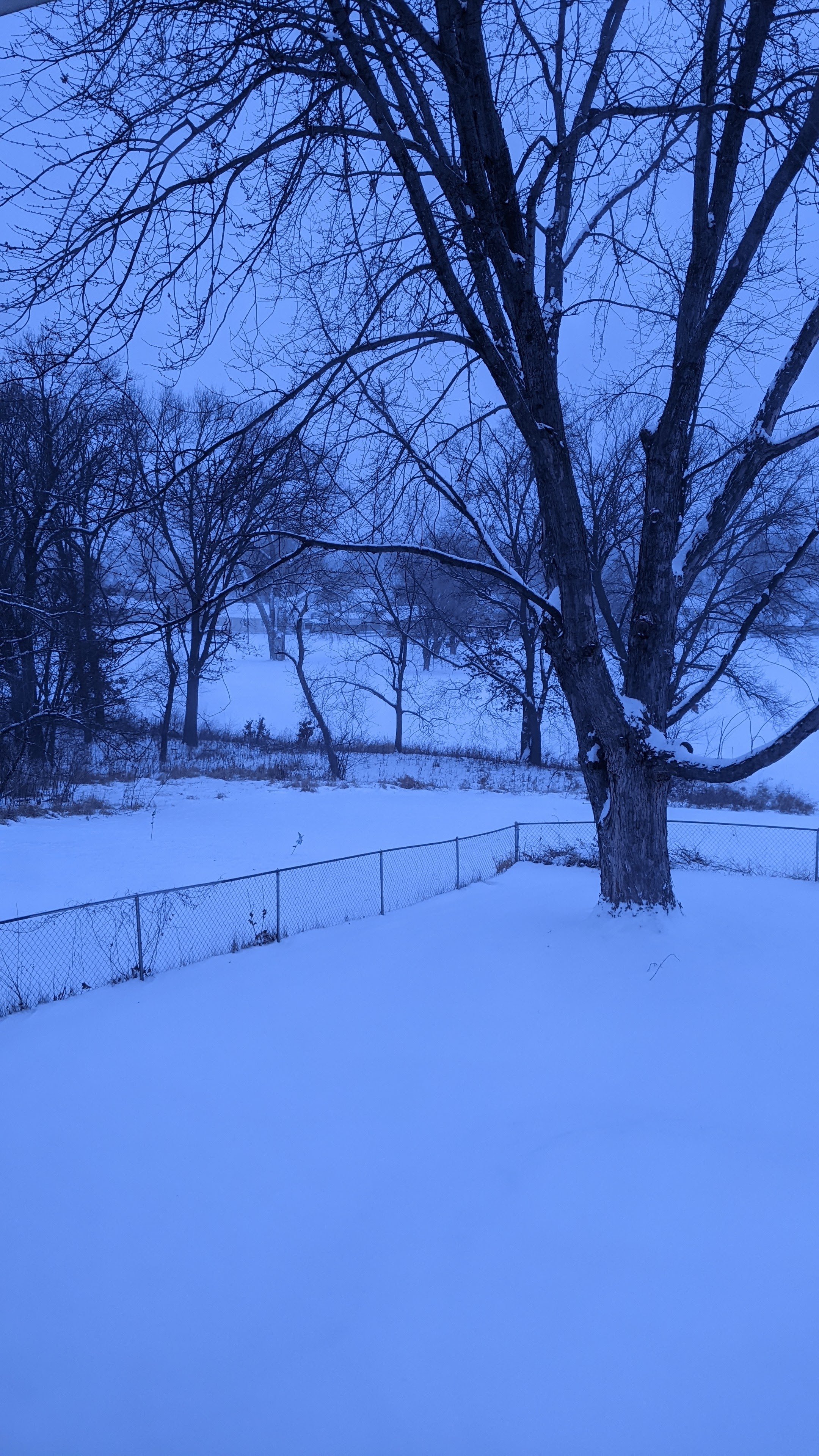
It helps that there’s snow on the ground and a -30 wind chill; these things serve as a reminder to slow down, to hibernate, and reflect on the things that I have. I can, in fact, do that without the glow of Christmas lights. But today I will probably watch the first 30 minutes of Empire Strikes Back and the first two installments of the Die Hard franchise to get me in the spirit. And perhaps I’ll re-read the passage in The Emergent that fairly well sums up the expectation and disappointment of the season…the melancholy satisfaction, if you will.
“…I could relate to Alma’s desire to flee the sinking feeling she always had throughout most of December. We somehow became infused with the same sense that something fantastic was supposed to happen. But the alternately high-spirited and depressing tunes of the season led us to conclude that the hope in the season was all an illusion.” –Kat Campos, The Emergent




 nick holmberg